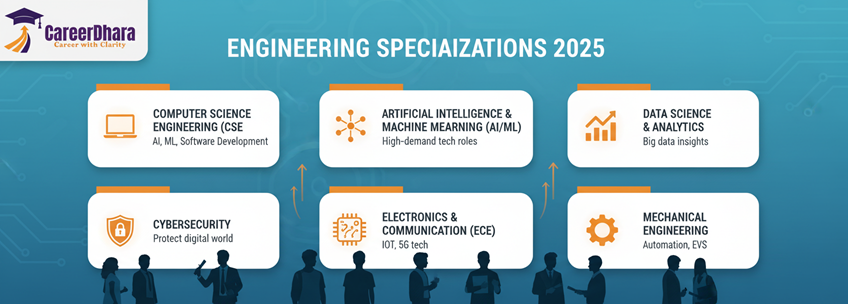
Engineering Specializations Guide: Choosing the Right Path for Your Career
Engineering is one of the broadest and most adaptable professional fields in the world, offering dozens of specializations suited to different interests, skills, and career ambitions. Whether you're a student deciding on a major or a professional considering a career pivot, understanding the major branches of engineering can help you find the right fit. Here's a breakdown of the most prominent specializations and what each one involves.
Mechanical Engineering
Mechanical engineering is one of the oldest and most versatile branches of the profession. It covers the design, analysis, and manufacturing of mechanical systems — everything from engines and HVAC units to robotics and industrial machinery. This path suits people who enjoy hands-on problem solving and want to understand how physical systems work together.
Electrical Engineering
Electrical engineers work with electricity, electromagnetism, and electronics. Specialists design power generation systems, circuits, communication networks, and control systems. With the global shift toward renewable energy and smart grid technology, demand for electrical engineers in sustainable infrastructure continues to grow.
Civil Engineering
Civil engineering focuses on the design, construction, and maintenance of infrastructure such as roads, bridges, dams, and buildings. Within this field, sub-specializations include structural, geotechnical, transportation, and environmental engineering. Civil engineers play a critical role in urban development and disaster-resistant construction projects.
Computer Engineering
Sitting at the intersection of electrical engineering and computer science, computer engineering focuses on hardware-software integration. This includes designing microprocessors, embedded systems, and computer architecture. As devices become smarter and more connected, computer engineers are central to the ongoing Internet of Things (IoT) revolution.
Software Engineering
Although sometimes categorized separately from traditional engineering, software engineering is one of the fastest-growing specializations today. It involves designing, developing, and maintaining software systems, applications, and platforms. Popular sub-fields include front-end, back-end, full-stack, cloud, and DevOps engineering.
Chemical Engineering
Chemical engineers apply principles of chemistry, physics, and biology to design processes for producing chemicals, fuels, pharmaceuticals, and food products. This field is essential across industries ranging from oil refining to biotechnology and advanced materials science.
Aerospace Engineering
Aerospace engineering focuses on designing and developing aircraft, spacecraft, satellites, and missiles. It typically splits into two branches: aeronautical engineering (within Earth's atmosphere) and astronautical engineering (beyond it). This specialization requires a strong grasp of aerodynamics, propulsion systems, and advanced materials.
Biomedical Engineering
Biomedical engineering combines engineering principles with medical and biological sciences to develop equipment, devices, and procedures that solve clinical problems. This includes designing prosthetics, diagnostic machines, and drug delivery systems — an increasingly vital field as healthcare technology continues to advance.
Environmental Engineering
Environmental engineers tackle issues related to pollution control, waste management, water treatment, and sustainability. As climate concerns intensify worldwide, this specialization is becoming increasingly important for designing eco-friendly, long-term solutions.
Industrial Engineering
Industrial engineering focuses on optimizing complex processes, systems, and organizations. Professionals in this field improve efficiency across manufacturing, logistics, healthcare, and other sectors by analyzing workflows and minimizing waste.
Emerging Specializations
Beyond the traditional branches, newer fields are gaining traction, including robotics engineering, nanotechnology engineering, mechatronics, and renewable energy engineering. These specializations often blend multiple disciplines to address modern technological and environmental challenges.
How to Choose the Right Specialization
When deciding on an engineering specialization, consider the following:
Your interests and strengths — Do you enjoy working with hardware, software, structures, or chemical processes?
Job market demand — Research which specializations are growing in your region or industry of interest.
Salary expectations — Compensation can vary significantly between specializations and industries.
Work environment — Consider whether you'd prefer a lab, office, construction site, or factory floor setting.
Many engineers also pursue additional certifications or graduate degrees to deepen their expertise in a specific niche, which can open doors to leadership roles and specialized positions.
Final Thoughts